
Guest Wi-Fi & OpenRoaming
Guest Wi-Fi is a marketing channel, not just internet
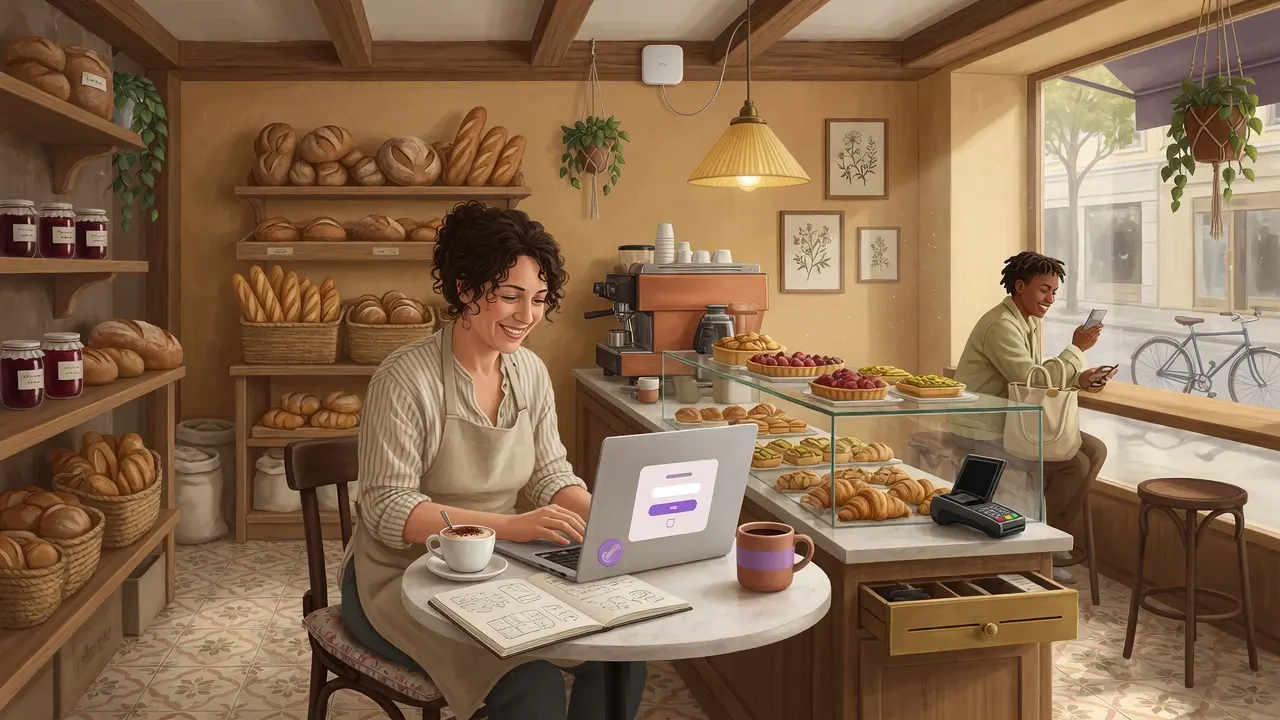
Every guest who connects becomes a consented contact, a counted visit and a reason to come back. oneCDP turns the Wi-Fi you already run into the first source of your customer base.
GDPR-first · EU data residency · from €39 per venue
In short
- A captive portal in your branding: the guest signs in with an e-mail address and a clear consent tick.
- OpenRoaming reconnects returning guests automatically, with no login page the second time.
- Contact, visit, length of stay and venue land in one oneCDP profile, ready for segments and campaigns.
- From €39 per venue per month. Launch in a day on the access points you already have.
What it is for
Five ways a guest network pays for itself
Most venues stop at a password printed on the receipt. Here is what the ones who get real money out of Wi-Fi do instead.
Build a contact base you are allowed to use
The guest signs in, you get an e-mail address with an explicit marketing consent and the timestamp that proves it. A café serving 60 guests a day collects several hundred usable contacts in the first month.
Bring guests back
An automatic e-mail three days after the visit: “We miss you, the next coffee is on us.” Winning back someone who has already been to you costs a fraction of finding a stranger.
Advertise to people who have actually been in
Export the segment to Google Customer Match or Meta Custom Audiences and show ads only to people who were physically in your venue. The consent for that purpose is collected on the login page, so the export is lawful.
Lift the average spend
The login page is the one screen every guest looks at. Put the offer there: “Second coffee half price before noon.” The guest sees it during the visit, not a week later.
Learn who your guests are
One optional question on the login page, plus the traffic itself: peak hours, average length of visit, the share of first-time and returning guests.
The maths
It pays for itself in the first month
An illustrative example built on typical ranges for a single café. Your numbers will differ.
E-mail has no per-message cost worth counting, so almost the whole gap is margin. These figures are an example based on typical ranges, not a promise of results.
How it works
From the connection to the campaign in three steps
The guest connects
A branded page opens on the phone. One field, one consent tick, and the guest is online in a few seconds.
The profile fills itself
E-mail, time and length of the visit, first or returning, which venue. It lands in the same profile as the receipt, the booking and the e-mail history.
You act on it
Build a segment in a couple of clicks, send e-mail, SMS or WhatsApp, or export the audience to Google and Meta.
Signing in
E-mail first, because that is what works in the EU
An e-mail address is the one identifier a European guest gives without hesitation, and it is the channel you can use afterwards at almost no cost. The other methods sit alongside it.
E-mail address
The guest types an e-mail, ticks the consent box and is online. The address is confirmed by the welcome message, so the base stays clean from the start.
One-time SMS code
A phone number and a code, for cases where you specifically want a verified number. Available as an option, with a cost on every message sent.
OpenRoaming
No login page at all: the device trusts the network and connects by itself. For returning guests and for every other venue in your chain.
OpenRoaming
The second visit needs no login page
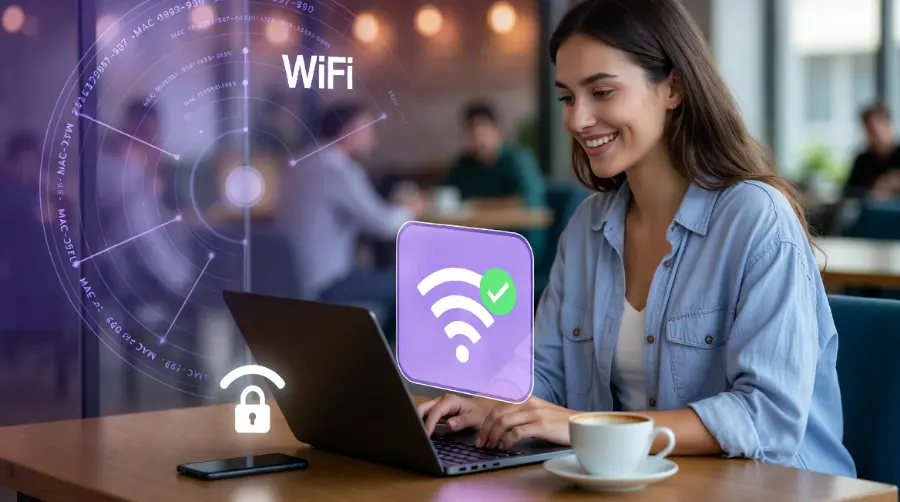
OpenRoaming (Passpoint, also known as Hotspot 2.0) lets a device that has signed in once reconnect automatically, in that venue and in every other venue on your network. The visit is still recorded, the guest is simply not asked again.
One network across the chain
A guest who signed in at one of your venues is online the moment they walk into any other.
Fewer drop-offs
Every login page loses a share of guests. The ones who come back never see it again.
Repeat visits still counted
An automatic reconnection is a visit in the profile, so returning guests do not disappear from the analytics.
Encrypted by default
Passpoint connects over WPA2-Enterprise, so guest traffic is not sitting on an open network.
Runs on the access points most venues already have:



Consent and GDPR
No EU law forces you to identify guests. One governs what you do with their data.
Outside the EU some countries require every public Wi-Fi user to be identified. The EU does not. What GDPR and the ePrivacy rules require is a lawful basis for the marketing you send afterwards and proof that the guest agreed to it. That is the whole difference between a list of addresses and an asset you can actually use.
Consent, recorded
Every sign-in stores the timestamp, the wording the guest saw and the version of it. When a regulator or a client asks, the record is there.
One field, nothing more
Data minimisation is not a limitation here. An e-mail address is all a campaign needs, and a short form converts better than a long one.
Separate purposes
Getting online, receiving marketing and being exported to an ad platform are separate ticks, so you can show what each guest agreed to.
Stored in the EU
Guest data stays on EU infrastructure, with the processing agreement you need in order to answer your own clients.
Unsubscribe that works
Every message carries a one-click opt-out, and the opt-out applies across every channel in the profile, not just the one it came from.
Access and erasure
A request to see or delete a profile is handled from the dashboard, inside the deadline GDPR sets.
Where it fits
Venues where people spend time

Restaurants, cafés and bars
The guest is sitting down with a phone in hand, so the sign-in rate is the highest of any venue type.
oneCDP for restaurantsRetail and shopping centres
Wi-Fi gives a store the one thing e-commerce always had: knowing who walked in, how often and what they did next.
oneCDP for retailHotels and aparthotels
Guests arrive without a local SIM, so Wi-Fi is not a nice extra. It is how they get online at all, which makes the sign-in rate close to total.
Fitness, beauty and clinics
Regular, scheduled visits. The visit history alone tells you who is drifting away, weeks before they stop coming.
Price
Priced per venue, not per contact
Guest Wi-Fi is the one part of oneCDP with a public price. Everything else depends on the configuration, so we send a quote after a short conversation instead of publishing a price list per component.
- Branded, GDPR-compliant login page
- OpenRoaming reconnection
- Guest profiles and visit history
- Segments and RFM
- E-mail, SMS and messenger campaigns
- Runs on MikroTik, Cisco, UniFi, Omada and OpenWrt
Questions we get about guest Wi-Fi
What is guest Wi-Fi with authentication?
A separate wireless network for visitors with a welcome page in front of it. The guest opens the page, signs in with an e-mail address and agrees to be contacted. The business gets a contact, the confirmed fact of the visit and a channel to use later.
Does the EU require me to identify Wi-Fi users?
No. There is no EU-wide rule forcing identification of every public Wi-Fi user, unlike some countries outside the EU. What GDPR governs is what you do with the data afterwards: you need a lawful basis for marketing and a record of the consent. oneCDP stores both.
Why e-mail rather than a phone number?
In the EU an e-mail address is what a guest gives without hesitation, and it is the cheapest channel to use afterwards. A phone number costs money on every message and the sign-in rate is lower. SMS is available as an option when you specifically want a verified number.
What is OpenRoaming?
An industry standard, Passpoint, also called Hotspot 2.0, that lets a device reconnect to a trusted network without a login page. A guest who signed in once at one of your venues is online automatically at the next one, and the visit is still recorded.
Do I have to replace my access points?
Usually not. The captive portal runs on MikroTik, Cisco, UniFi, Omada and OpenWrt hardware. If a venue has nothing suitable we say so before you buy anything.
How long does it take to launch?
A day for a single venue. Most of that is designing the login page, which is built in an editor without a designer.
Can I use the data for Google and Meta ads?
Yes, if the guest agreed to it. Ad export is a separate consent purpose on the login page, so the segment you upload to Customer Match or Custom Audiences carries its lawful basis with it.
What happens to the data if I leave?
It is yours. Profiles, consents and visit history export in a standard format, and we delete our copy on request.